
Insights
Evidence-led perspectives on human risk, security culture and the regulators who ask about them.
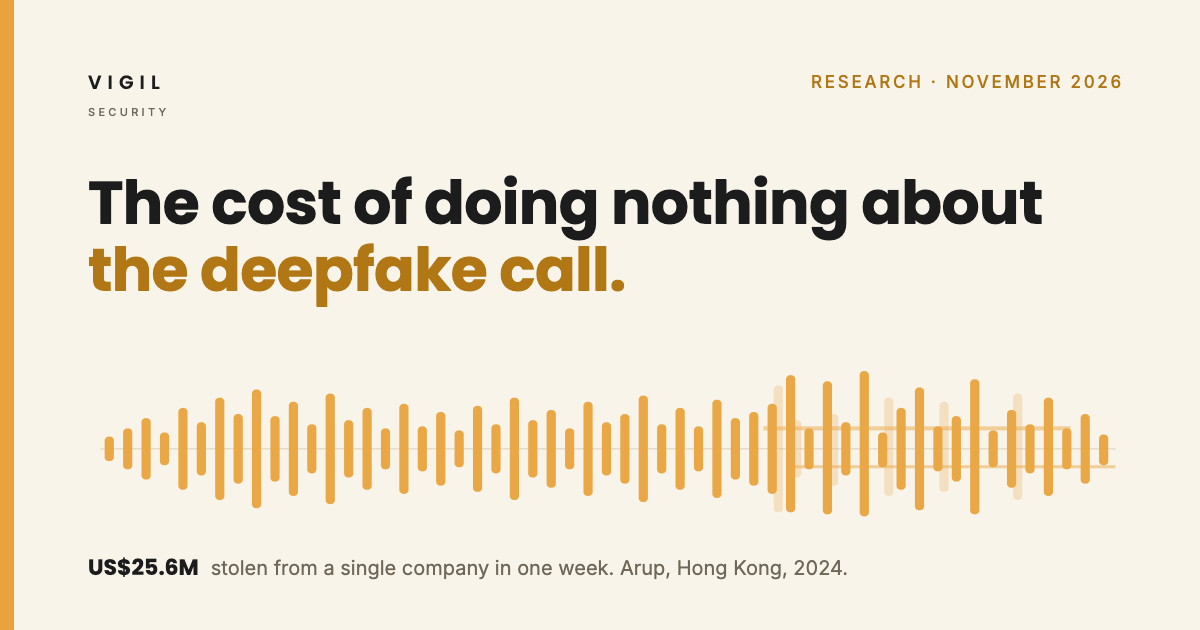
The cost of doing nothing
The fake executive on the call is no longer the story. The story is how fast it is spreading, how little most workforces can do about it, and what a year of standing still actually costs.

Your CEO just called. It wasn’t your CEO.
In early November 2026 the US DOJ charged a ring that used AI to clone CEOs and steal $129 million. Your security awareness training would not have stopped it. Here is what does.
The Human Layer
The banks just admitted they cannot tell your people from a machine. The AI-agent story is real. The bigger one is human.
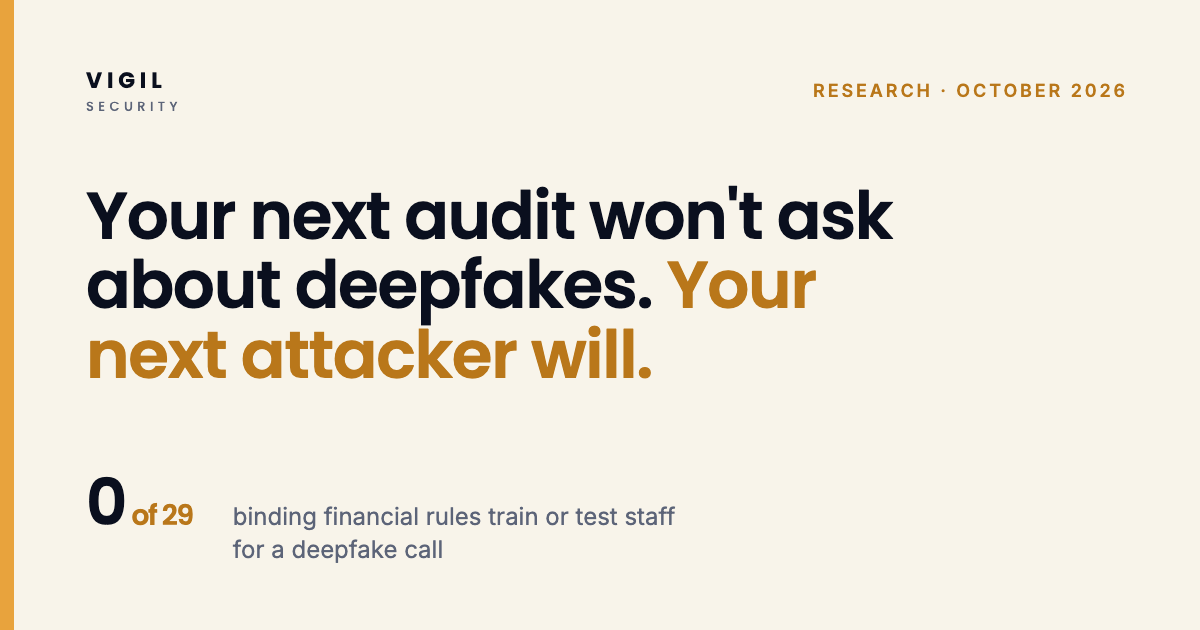
Your next audit won't ask about deepfakes. Your next attacker will.
A gap analysis of 78 regulator documents: no binding rule trains staff for a deepfake call. What regulators already recommend, and how to be ready now.
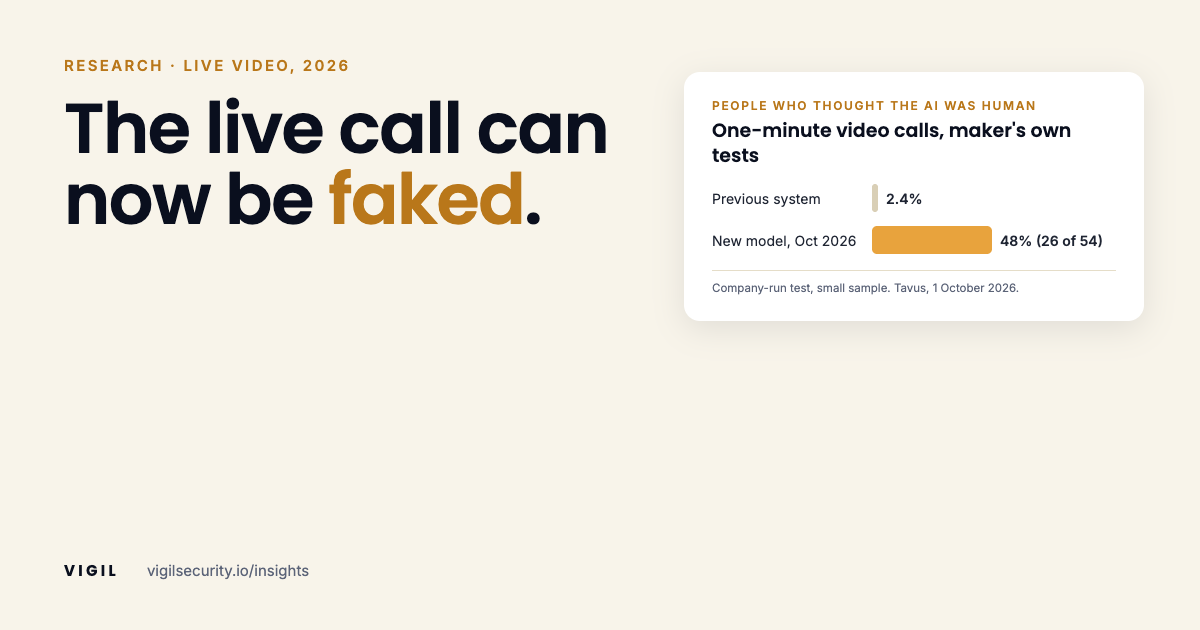
The live call can now be faked
In June 2026 most people spotted an AI on a live video call within seconds. In October a company test said about half did not. What still works when you cannot trust the face on the screen.
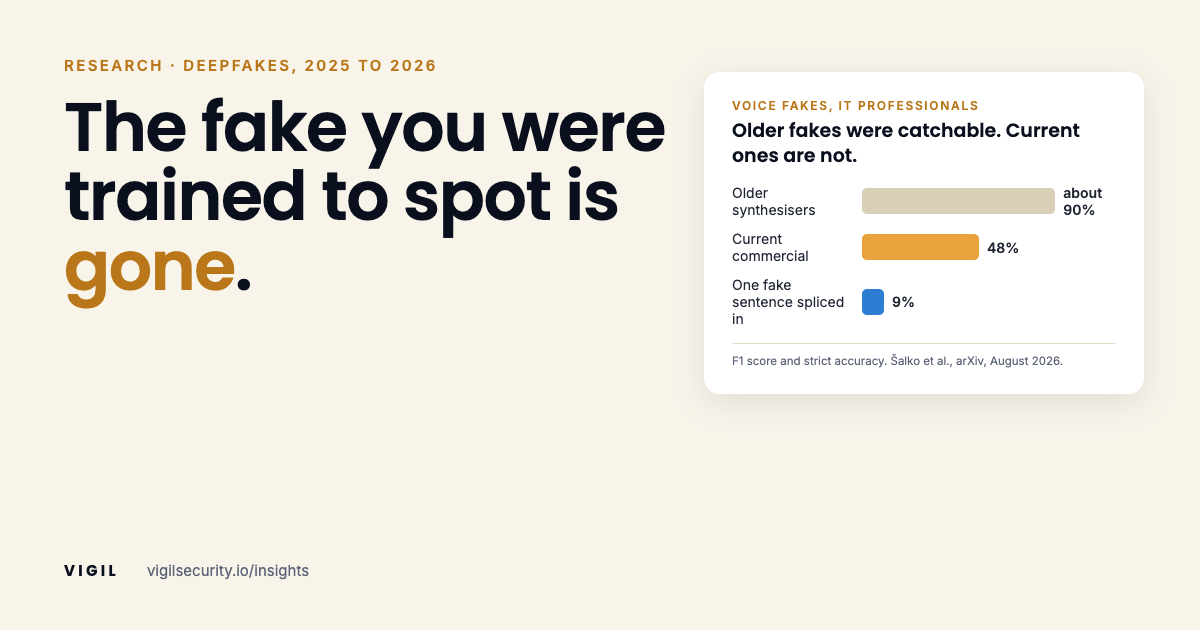
The fake you were trained to spot is gone
Research published since the start of 2025 shows people and detectors can no longer reliably spot deepfake voices and video, and that falling losses come from rehearsed verification, not sharper eyes.
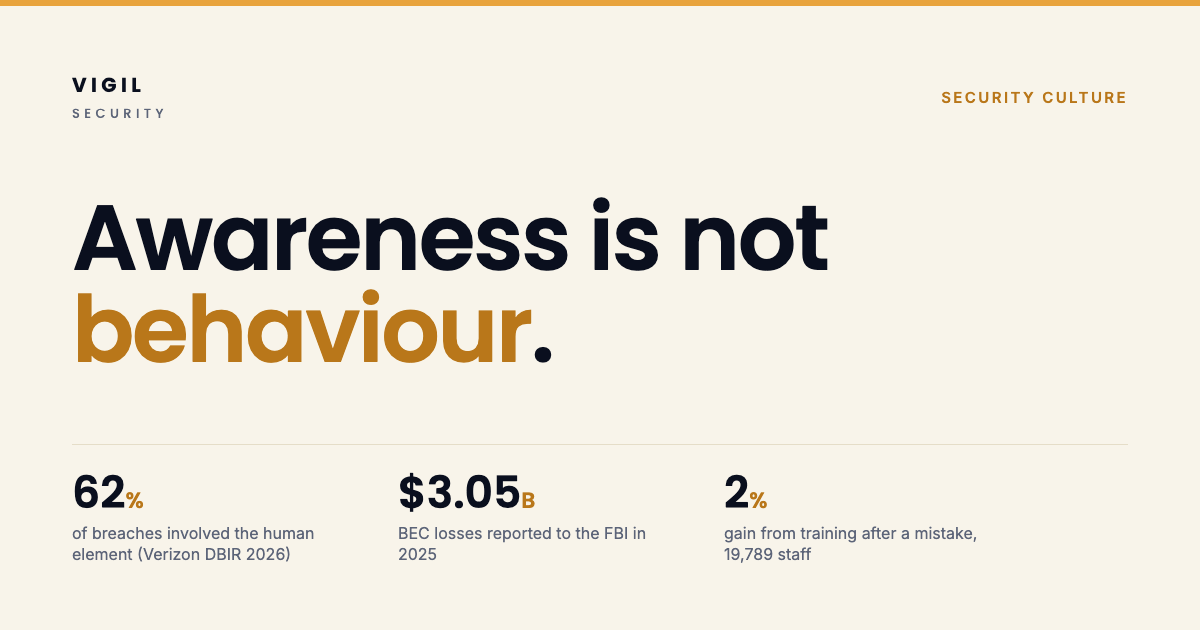
Awareness is not behaviour
What the largest workplace studies say about changing security behaviour, and five shifts that build a culture where people verify, report and speak up.